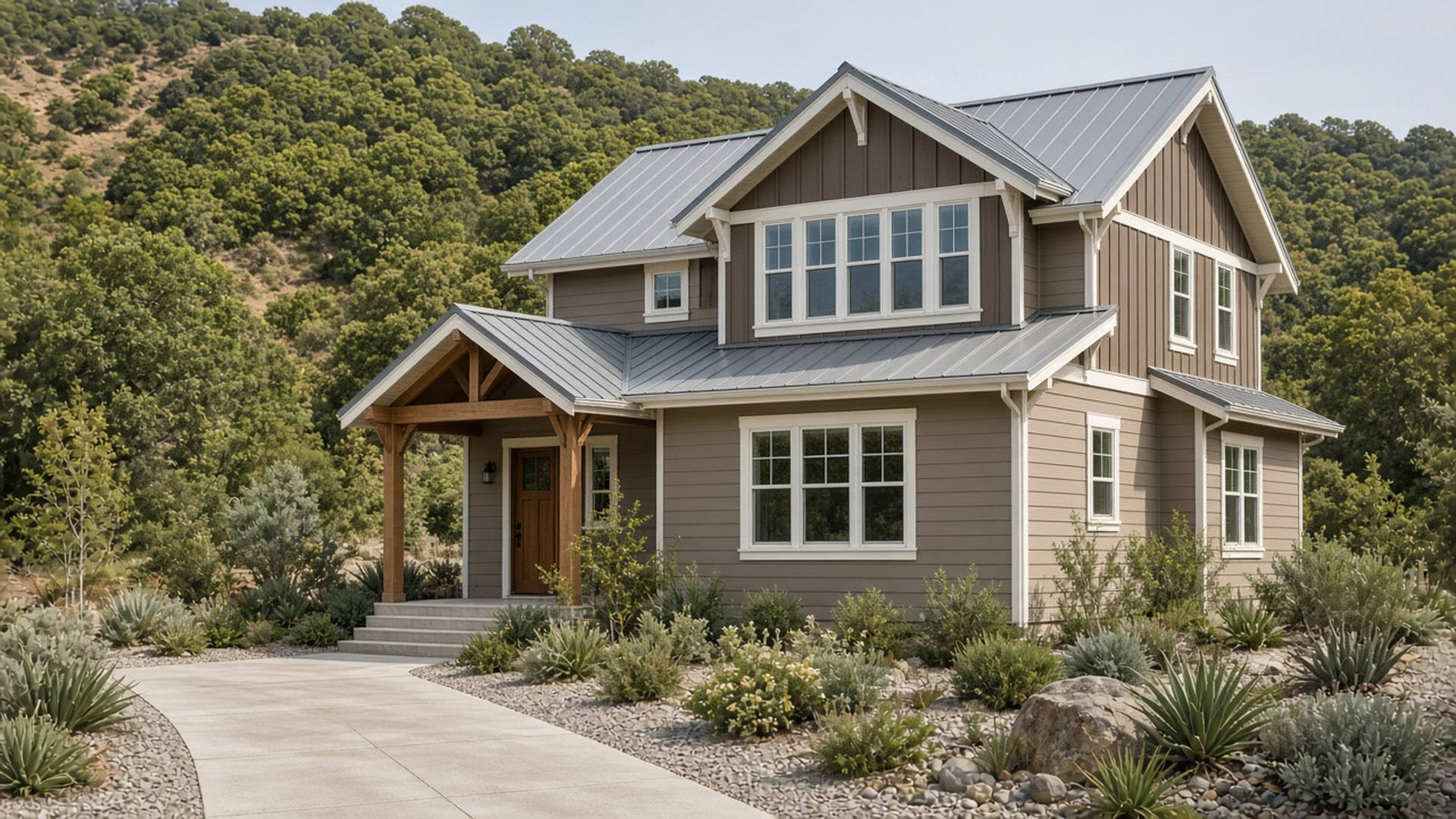
Metal Roof Troubleshooting
Standing Seam Roof Repair in San Luis Obispo, CA
Noticed a leak or damaged metal panel? Discuss the problem with us. Get a Free Estimate
Metal Roof Troubleshooting
Noticed a leak or damaged metal panel? Discuss the problem with us. Get a Free Estimate
Standing seam metal roofs are designed to provide a durable roofing surface, but problems can still develop. Water intrusion, damaged flashing, loose trim, punctures, improperly sealed penetrations, and previous installation defects may affect the roof's performance. Finding the actual source of a problem is an important first step.
A water stain inside the building does not always indicate that the roof directly above it is the source. Water can travel along the roof deck or other building components before becoming visible. We approach repair discussions by considering the roof design, panel system, reported symptoms, and the areas where water may enter.
Different symptoms can point to different roofing issues. The repair approach should match the underlying condition and the specific panel system.
Leaks may develop around flashing, roof openings, valleys, transitions, or damaged panels. Identifying the entry point is important before deciding on a repair method.
Panels may become dented, punctured, scratched, or otherwise damaged. The appropriate response depends on the damage, panel material, location, and whether the surrounding system remains sound.
Flashing around chimneys, skylights, vents, and roof edges must work with the standing seam panel system. Deteriorated or poorly integrated flashing can create a path for water intrusion.
Standing seam systems rely on properly formed seams and compatible attachment components. Problems with these areas should be evaluated in relation to the particular roofing profile and installation method.
Environmental exposure, scratches, incompatible metals, and damaged protective coatings may contribute to surface deterioration. Coastal properties deserve particular attention to material compatibility and exposure.
We emphasize identifying the underlying condition rather than assuming every roof leak needs the same treatment.
Repair methods need to suit the particular metal profile, seam arrangement, and fastening approach.
Flashing, roof penetrations, edges, and transitions can be as important as the visibly damaged section.
When damage is extensive or the existing system is unsuitable, replacement may deserve consideration instead of repeated localized repairs.
Describe the leak or damage you have noticed so we can discuss the next step.
Free — no obligations
We discuss leaks, interior staining, visible damage, unusual noises, previous repairs, and when the problem first appeared.
The panel profile, roof slope, penetrations, flashing, and surrounding conditions help guide the investigation.
We consider the visible evidence and likely water-entry paths before discussing a repair approach.
The proposed work should be appropriate for the material and the extent of the problem. If a repair is not practical, replacement can be discussed.
After the repair, the affected roofing details should be considered to ensure the work addresses the identified issue.