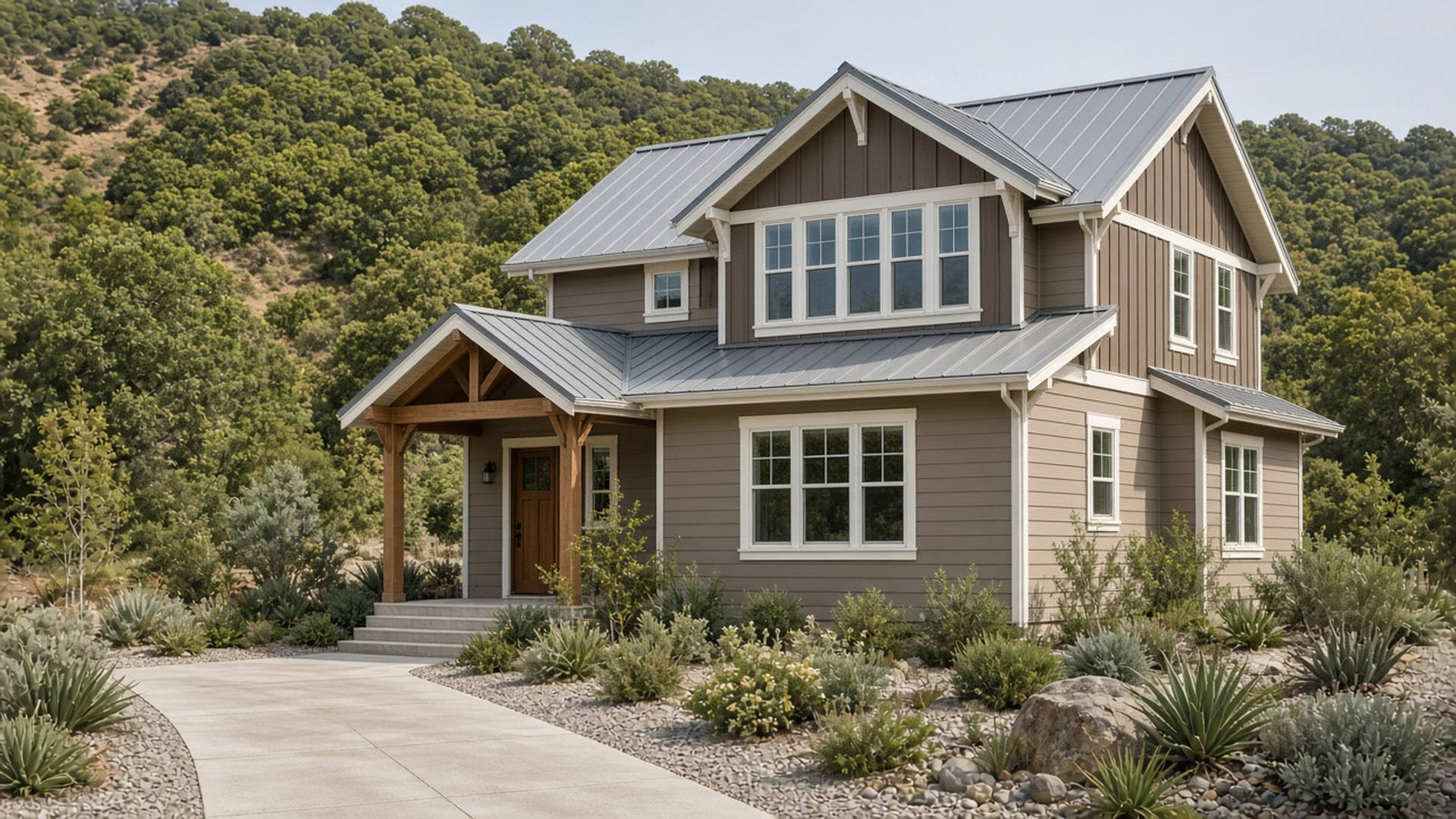
Interlocking Metal Roof Panels
Snap-Lock Standing Seam Panels in San Luis Obispo, CA
Interested in a snap-lock metal roofing system? Let's review your roof design. Get a Free Estimate
Interlocking Metal Roof Panels
Interested in a snap-lock metal roofing system? Let's review your roof design. Get a Free Estimate
Snap-lock standing seam panels use specially shaped panel edges that connect by snapping together to form raised seams. This creates the distinctive standing seam appearance without relying on the same field-seaming process used by mechanically seamed systems. The finished roof has a consistent panel pattern and a clean architectural appearance.
The right snap-lock system depends on the roof's slope, panel material, dimensions, exposure, and manufacturer requirements. San Luis Obispo properties can have different environmental conditions depending on proximity to the coast and surrounding terrain. We consider those factors when discussing whether snap-lock panels are appropriate for a particular building.
The individual components and installation requirements determine how a snap-lock system performs as a complete roofing assembly.
The panel edges are shaped to connect and create a raised seam. The precise profile varies between manufacturers and systems, so compatible components must be used throughout the installation.
Snap-lock panels are available in different metal materials, thicknesses, and protective finishes. Material selection should reflect the property's location, expected exposure, architectural requirements, and the manufacturer's available options.
The panel system uses specified attachment components to secure the roofing assembly. Their arrangement and compatibility matter for secure installation and the thermal movement of the metal.
Not every snap-lock profile is suitable for every roof slope or weather condition. Manufacturer requirements and project-specific details need to be reviewed before selecting a system.
The roof needs compatible trim and flashing at edges, ridges, valleys, and openings. These components should be planned alongside the panels rather than treated as unrelated finishing details.
We focus on the characteristics of the selected snap-lock system rather than assuming every standing seam panel installs the same way.
Panels, clips, trim, flashing, and underlayment should follow the requirements of the selected system.
Roof pitch, geometry, exposure, and drainage all help determine whether snap-lock panels are a suitable choice.
Metal panels expand and contract with temperature changes. The attachment system needs to accommodate movement as intended by its design.
Ask about snap-lock panel options for your Central Coast property.
Free — no obligations
We discuss roof dimensions, slope, architectural style, and any special features that could affect panel selection.
Panel seam appearance, material, finish, and system specifications are considered together.
The selected profile needs to suit the roof slope, attachment arrangement, environmental exposure, and manufacturer requirements.
Flashing, trim, roof openings, panel transitions, and drainage are incorporated into the installation plan.
The finished roof should have consistent panel alignment, properly connected seams, and coordinated finishing details.