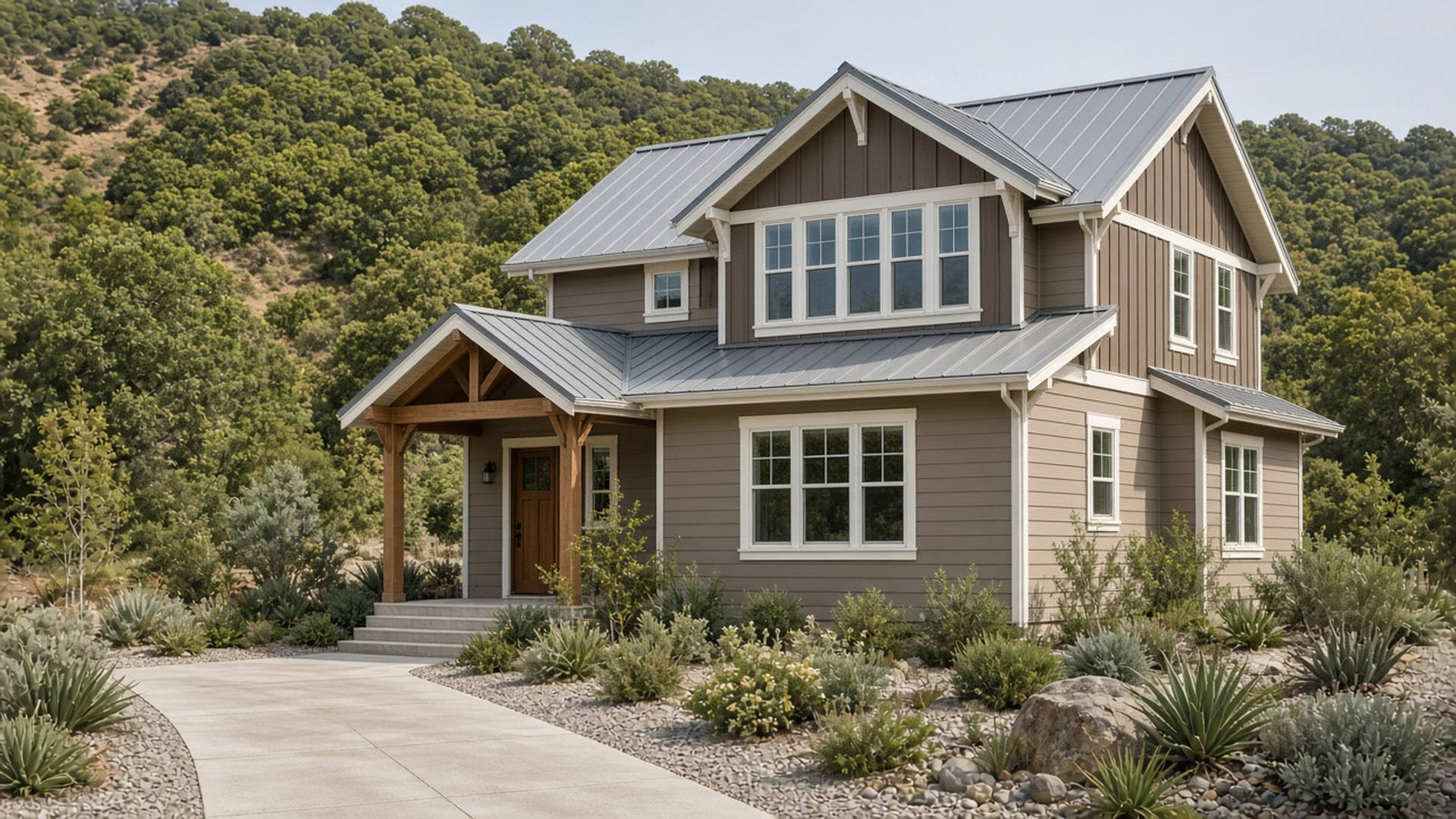
Metal Roofing Overlay Options
Metal Roof Over Shingles in San Luis Obispo, CA
Wondering whether your shingles can remain beneath metal roofing? Let's review the roof. Get a Free Estimate
Metal Roofing Overlay Options
Wondering whether your shingles can remain beneath metal roofing? Let's review the roof. Get a Free Estimate
Installing standing seam metal roofing over an existing shingle roof may be possible in certain circumstances, but it is not automatically the right choice. The condition of the shingles, roof deck, structure, slope, moisture history, and proposed installation system all need consideration. Local building requirements and applicable manufacturer instructions must also be followed.
An overlay should never be treated as a way to hide an existing roofing problem. Damaged decking, trapped moisture, uneven surfaces, and deterioration can affect the finished system. We discuss the existing roof first and consider whether an overlay is appropriate or whether removing the old roofing material is the more suitable approach.
A careful evaluation helps establish whether the existing roof can support the proposed metal roofing assembly.
The number of existing roof layers, shingle condition, surface unevenness, and signs of deterioration need consideration. A severely deteriorated or irregular surface may not provide a suitable foundation.
The roof deck and supporting structure must be suitable for the additional roofing assembly. Existing layers contribute weight, and any signs of structural deterioration should be addressed.
Previous leaks, trapped moisture, ventilation concerns, and the condition of the roof assembly should be considered before an overlay is planned. Covering a damp or damaged roof can make existing problems harder to identify.
Standing seam panel systems have specific requirements for roof slope, underlayment, attachment, and substrate conditions. The proposed system must be compatible with the existing building.
Applicable building codes, permit requirements, and manufacturer installation instructions need to be checked. Requirements can depend on the property and the details of the proposed work.
We believe the existing roof should be understood before anyone decides to install new material over it.
An overlay should not conceal an active leak, wet decking, or deteriorated roofing components.
The chosen panel system must be compatible with its substrate, slope, attachment method, and manufacturer requirements.
Removing existing shingles may be the better approach when the roof needs repairs or a properly prepared installation surface.
Before covering an existing shingle roof, find out what condition it is really in.
Free — no obligations
We ask about the roof's known history, previous leaks, existing layers, and any areas of visible deterioration.
The decking, structure, slope, ventilation, moisture conditions, and surface uniformity are important considerations.
The proposed standing seam system needs to meet its installation requirements and applicable local building provisions.
We discuss whether an overlay is suitable or whether removal and preparation of the roof deck make more sense.
Once the direction is established, the panel layout, underlayment, attachment, flashing, and drainage details can be considered.